About me
I’m a physicist working on observational cosmology and statistical methods for cosmological data. I’m a PhD candidate at the Institute of Physics of Buenos Aires (IFIBA), University of Buenos Aires, under the supervision of Dr. S. J. Landau, and a graduate teaching assistant at the Physics Department (FCEN, UBA). My thesis focuses on testing alternative dark energy models with observational data, and I expect to finish it in November 2026.
News
- Sep 2026 — Observational constraints on Luciano–Saridakis holographic dark energy published in Physics of the Dark Universe.
- Jun 2026 — Poster presentation at PASCOS 2026 (Sheffield, UK).
- Jun 2026 — Observational constraints on Luciano–Saridakis entropic cosmology published in Physics of the Dark Universe.
- Apr–Jul 2026 — Research visit to the Institute for Theoretical Particle Physics and Cosmology at RWTH Aachen, in collaboration with Dr. J. Lesgourgues.
- Apr 2026 — Geometric Cosmology models: statistical analysis with observational data published in Universe.
- Dec 2025 — New preprint: Generalized tension metrics for multiple cosmological datasets.
- Oct 2025 — Invited talk at the 2nd International Joint Meeting on Cosmology and Gravitation (Lima, Peru).
Research
Cosmological tensions and statistical tools
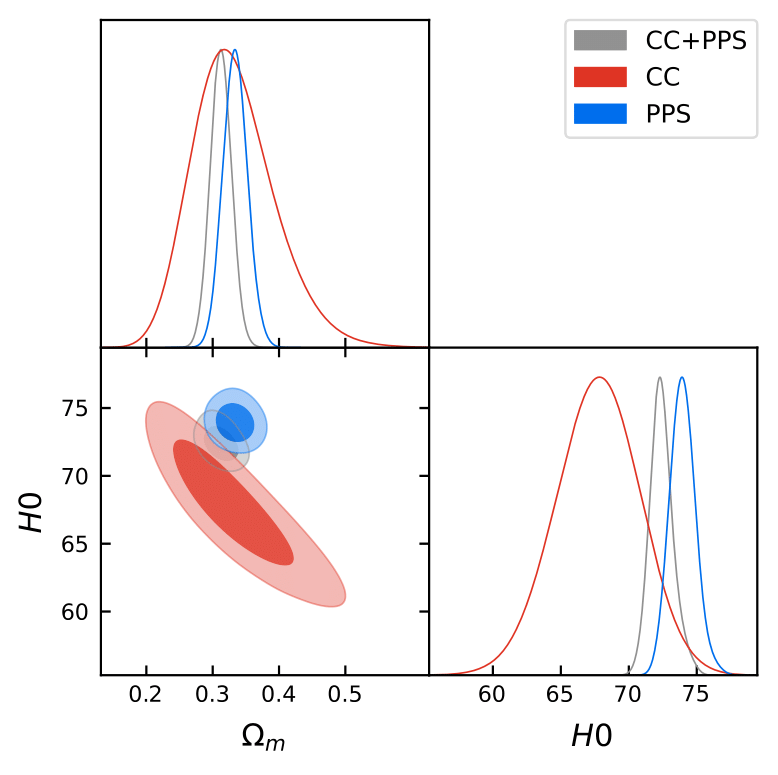
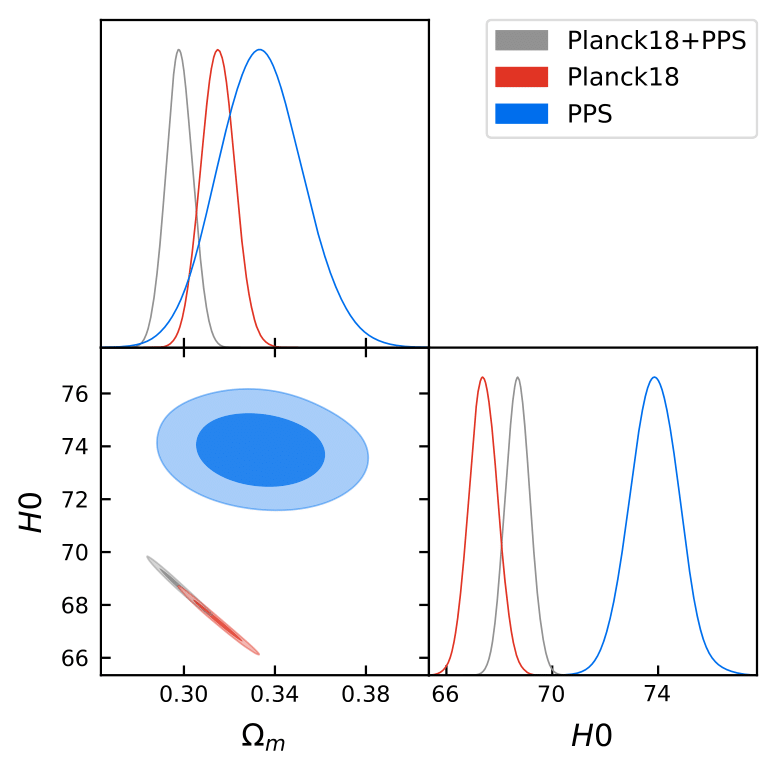
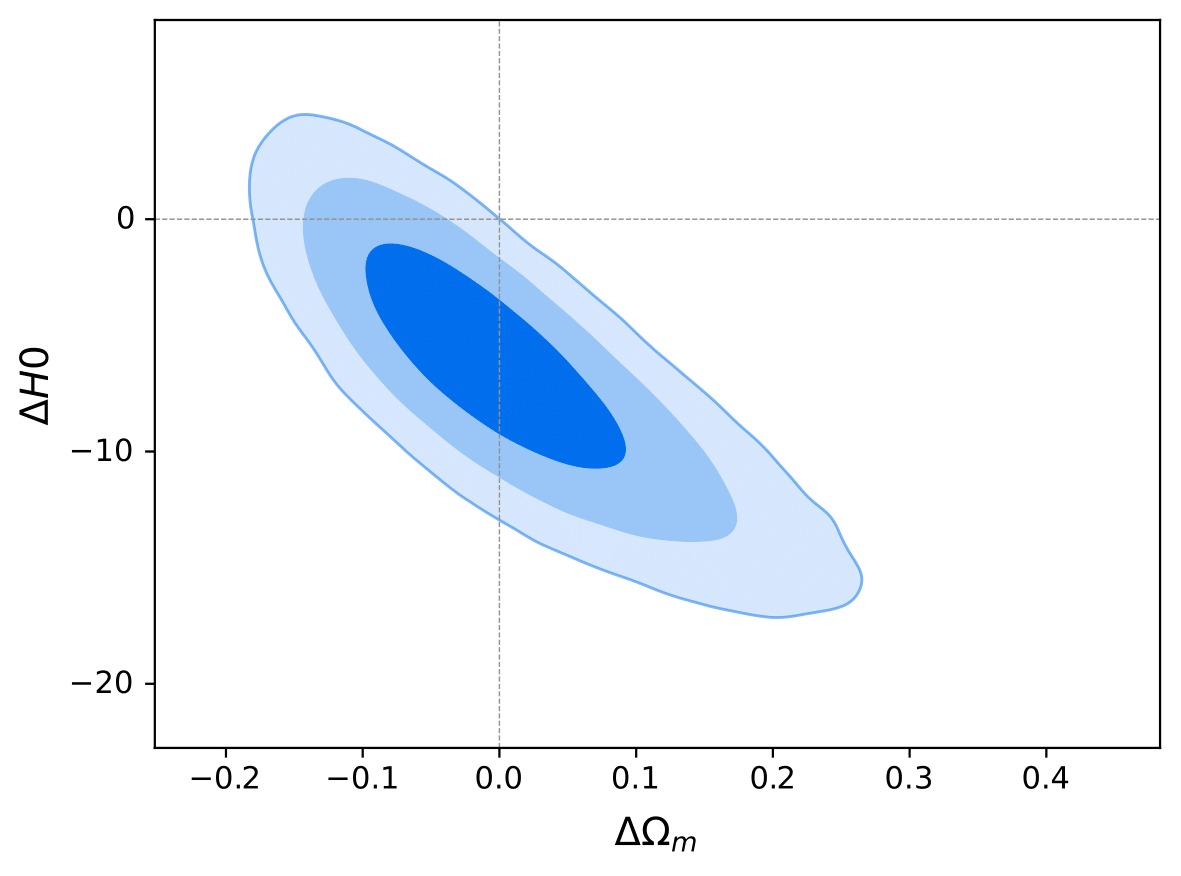
How can we tell whether cosmological datasets really disagree? I study statistical metrics that quantify the tension between posterior distributions obtained from different data. In this article we discussed several of these tools, highlighting the impact of marginalization, and assessed the tension between SH0ES Cepheids + Pantheon+ and Cosmic Chronometers data, finding a significant tension between them. More recently, we introduced a generalized tension estimator for multiple datasets, which enables a geometric interpretation of the discrepancies.
Alternative cosmological models
I test alternatives to the standard ΛCDM model against observational data:
- Entropic cosmology — we obtained the first observational constraints on the Luciano–Saridakis entropic cosmology, showing that it can fit current data while potentially alleviating the Hubble tension. We then provided the first observational assessment of the holographic dark energy model that arises from the same generalized entropy, which contains standard holographic dark energy and ΛCDM as limiting cases.
- Geometric Cosmology — we investigated modified gravity models built from geometric reformulations of general relativity, and confronted them with observational data, work started during my research stay at UNAM (Mexico City).
- Ultralight vector dark matter — I contributed to a modification of the CLASS code that implements cosmological perturbations of ultralight vector dark matter fields (Phys. Rev. D 111, 103520).
- I also contributed to the CosmoVerse White Paper, a community review of observational tensions in cosmology.
f(R) gravity with quasars
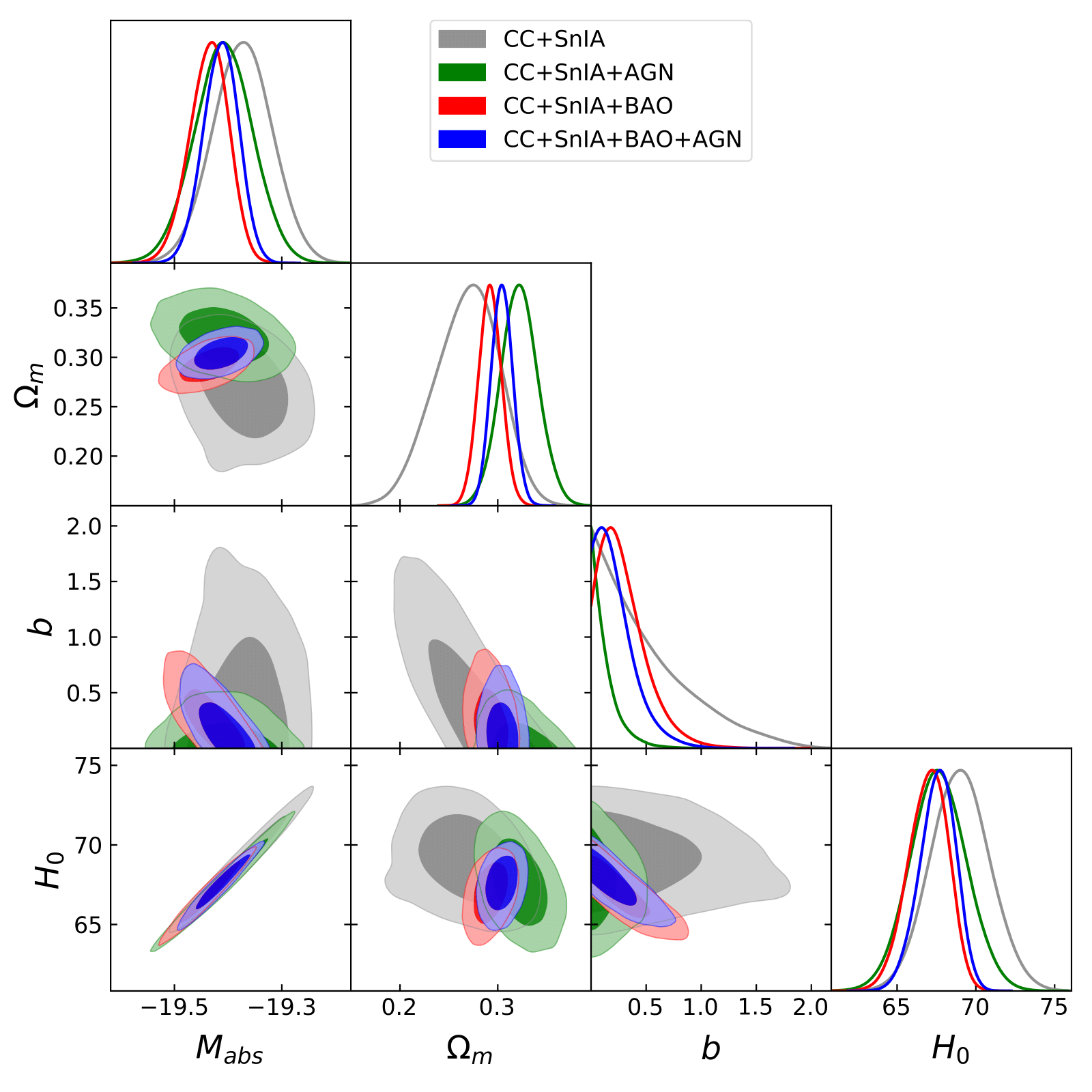
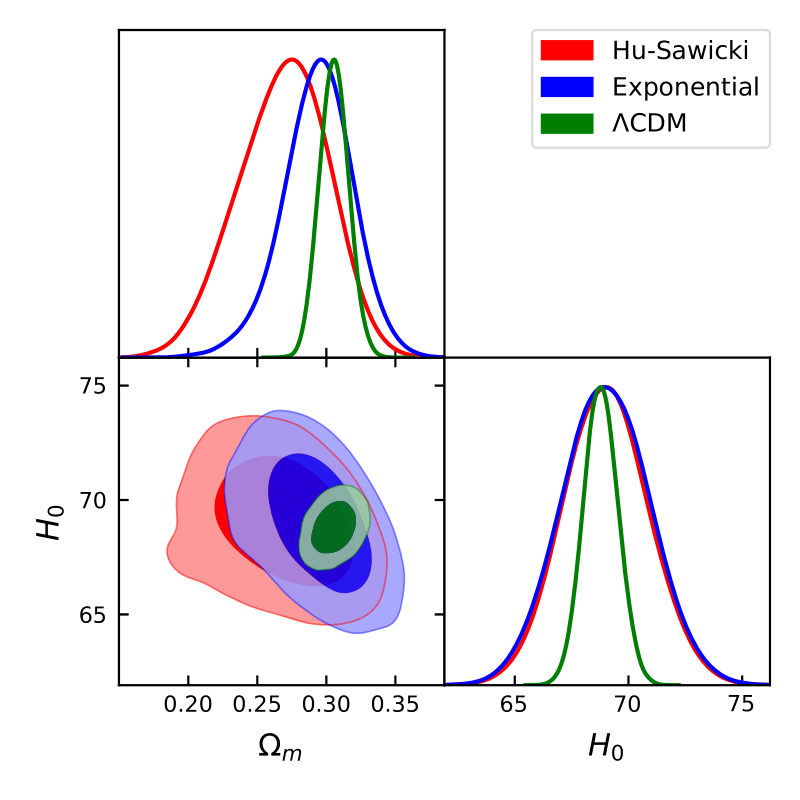
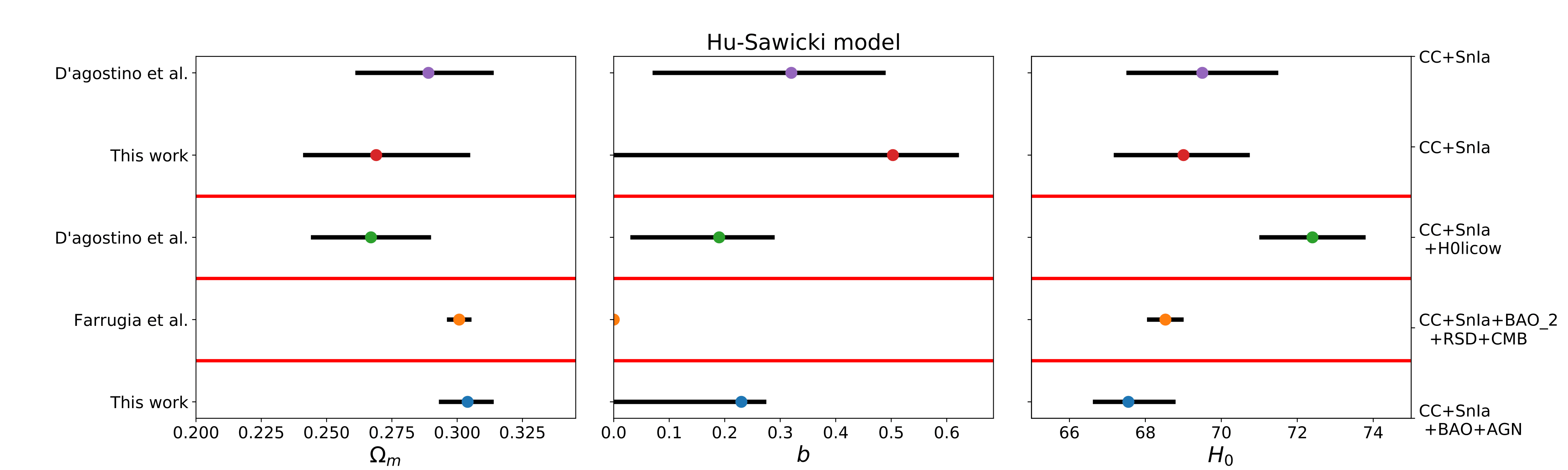
During my Licentiate thesis and the first year of my PhD I studied f(R) theories, a family of alternatives to ΛCDM. In particular, I constrained the Hu–Sawicki and exponential models using X-ray and UV fluxes of quasars (Active Galactic Nuclei), which are high-redshift data available to test cosmological models. You can find this work here.